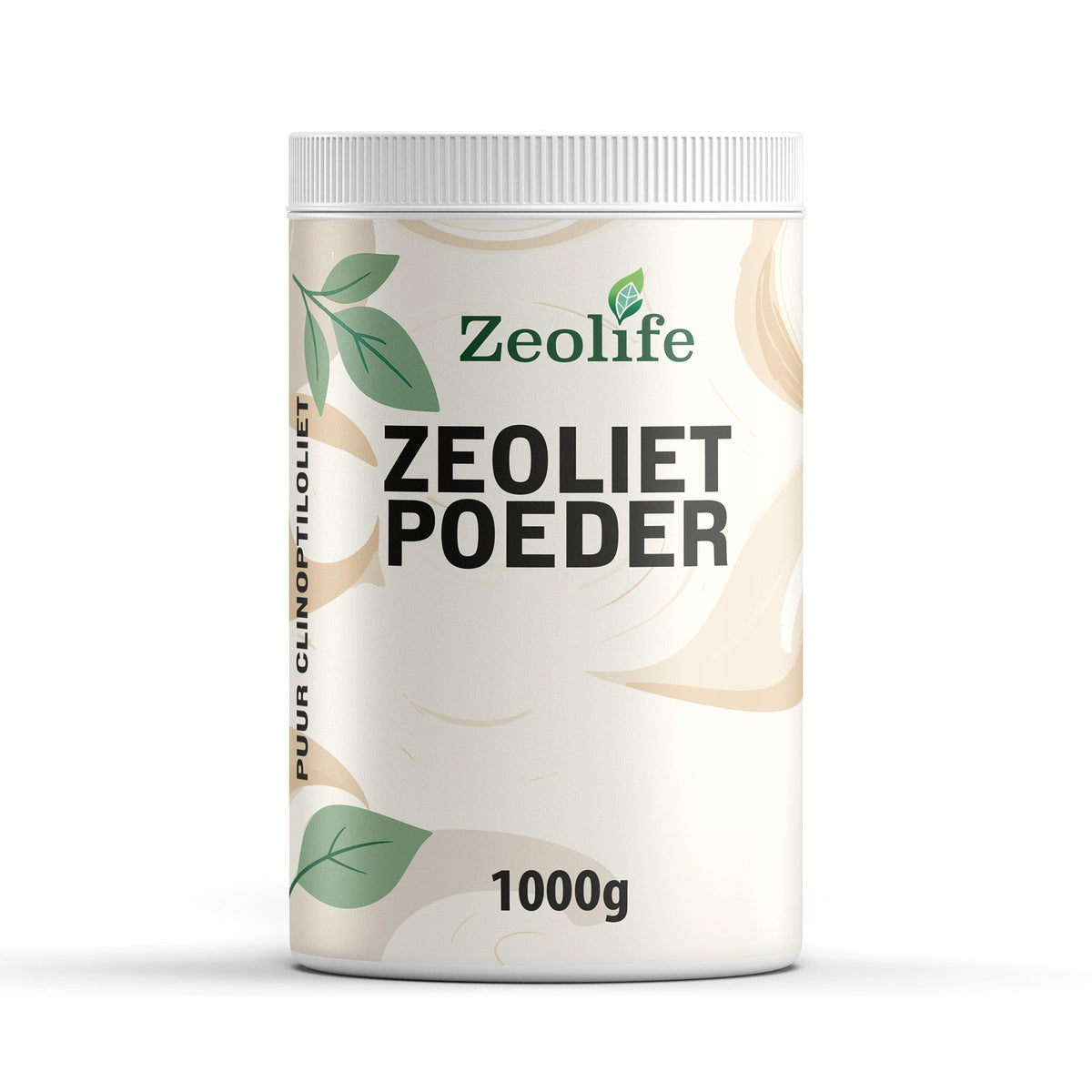
Zeolife Zeolite Powder
Are you looking for pure zeolite powder, free from additives? Zeolife offers a finely ground mineral powder of volcanic origin, consisting of 95% clinoptilolite. It comes in a 1-kilogram jar and is entirely plant-based. This page explains what zeolite is, where it comes from, and the structure of this natural mineral.
What exactly is zeolite?
Zeolite is a natural mineral that forms where volcanic ash and lava come into contact with seawater. Over thousands of years, a solid crystal with a particular structure forms. There are dozens of types of zeolite, but the form present in this powder is called clinoptilolite, the most studied variant. So, you are not buying a processed product, but a ground rock formed in nature. The powder is grey to light brown in color and has almost no scent or taste of its own.
The porous structure of clinoptilolite
What makes clinoptilolite so special is the shape of the crystal. The structure is riddled with tiny channels and cavities, much like a sponge on a molecular scale. This network carries a slight negative charge, allowing the mineral to retain and exchange positively charged particles, a property chemists call ion exchange. It is precisely for this physical property that zeolite has been used for decades in water filters and agriculture.
Natural zeolite, not a synthetic variant
Not all zeolites are created equal. Industry also manufactures synthetic zeolite, produced in laboratories for uses such as detergents. Zeolife powder, on the other hand, is of natural origin: it is extracted from volcanic deposits and then merely ground and sieved, without chemical treatment. This difference in origin partly determines its purity and clinoptilolite content. The packaging clearly indicates that it is a 100% natural mineral.
95% clinoptilolite and finely ground
The quality of zeolite powder depends on two things: its purity and the fineness of its grind. This powder contains up to 95% clinoptilolite, which is high for a natural mineral. It is also micronized to an average particle size of about 25 micrometers (a micrometer being one-thousandth of a millimeter): a very fine powder, which mixes more easily with water and appears less granular than coarser variants. A 1-kilogram jar is generous and lasts a long time for regular use.