Calcium D-Glucarate 500mg NOW Foods 90 gélules végétales pot face avant
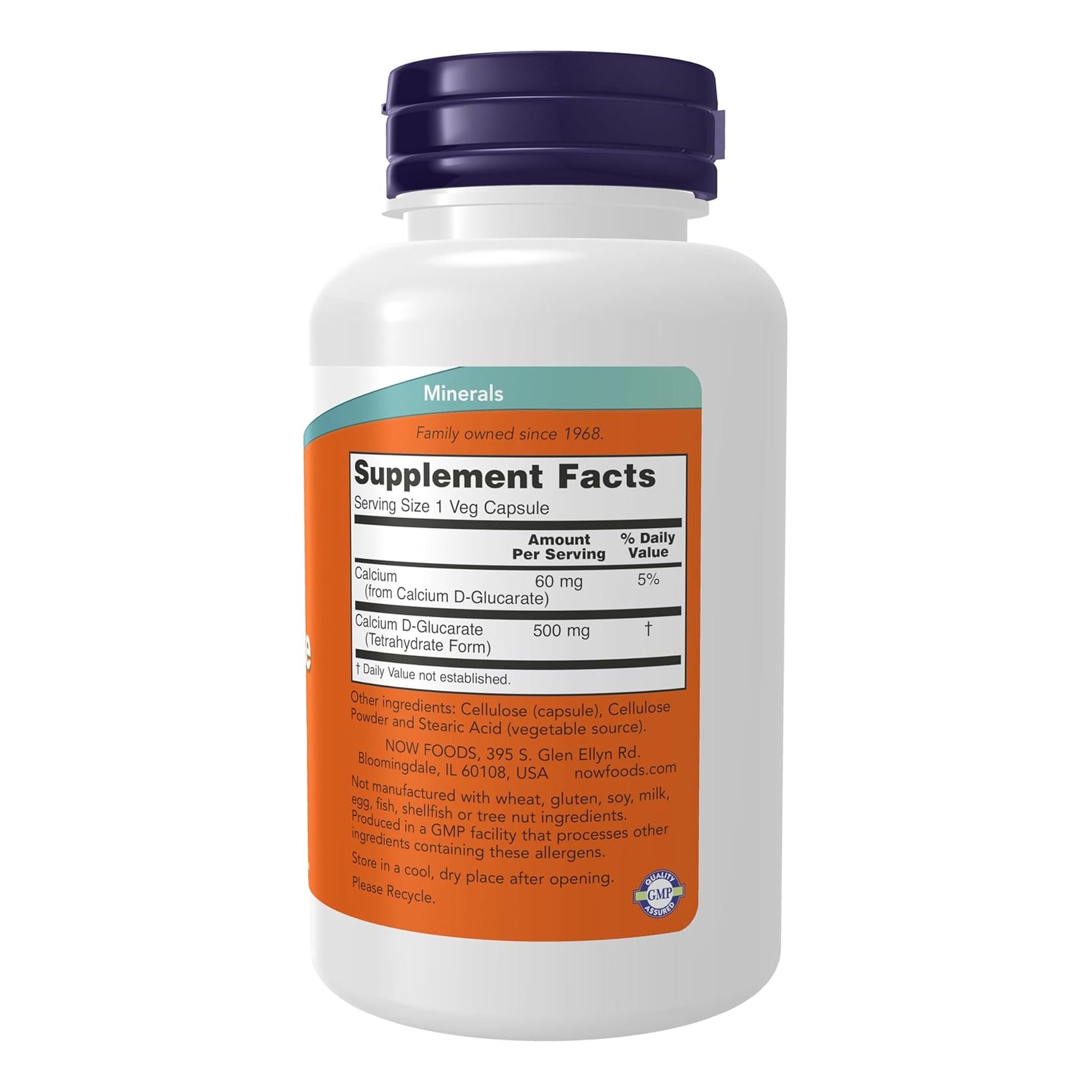
Calcium D-Glucarate 500mg NOW Foods étiquette dos avec informations nutritionnelles
Calcium D-Glucarate 500mg NOW Foods étiquette mode d'emploi et code-barres

NOW Foods

Calcium D-Glucarate 500mg | 90 Capsules | NOW Foods

Angebotspreis€34,90

Nicht auf Lager.

Tarifs dégressifs

Quantité Prix unitaire Remise
1 pièce €34,90 -
2 pièces €33,16 -5%
3 pièces €31,41 -10%
4 pièces €29,67 -15%

Spezifikationen

Marke NOW Foods
Kategorie Minerals
Artikelnummer Now-049
Barcode 0733739030979
Mindestens haltbar bis Auf Anfrage
Chargennummer Auf Anfrage
Inhalt 90 capsules
Anzahl Portionen 30

Calcium D-Glucarate 500mg by NOW Foods

Calcium D-glucarate is the calcium salt of D-glucaric acid, a substance your body produces in small amounts and which is also found in apples, oranges, and broccoli. NOW Foods uses the tetrahydrate form of the substance, at 500 mg per vegetable capsule. The container holds 90 capsules, providing a 30-day supply at the recommended dosage. This type of supplement is most often sought after by individuals interested in glucuronidation, a process that takes place in the liver and intestines.

What happens to calcium D-glucarate in your body?

As soon as you take a capsule, the substance first reaches the stomach acid. This converts calcium D-glucarate into D-glucaric acid. This then results in a mixture of three related substances, of which D-glucaro-1,4-lactone accounts for the largest share of active action. This molecule inhibits an enzyme called beta-glucuronidase. This enzyme is found in the intestines and in tissues such as the liver. In short: the process by which your body makes substances water-soluble, called glucuronidation, therefore proceeds slightly differently than in the absence of this substance.

Researchers often measure this process by observing beta-glucuronidase activity in the blood and tissues. In animal studies, a lower activity of this enzyme is observed after taking calcium D-glucarate, particularly in the liver and intestinal wall. In humans, this has been less thoroughly studied than in animals; most of the evidence therefore still comes from laboratory and animal studies rather than large-scale human studies.

Why the tetrahydrate form?

Calcium D-glucarate is sold in various forms, most often bound to calcium or sodium. NOW Foods opts for the tetrahydrate form, calcium D-glucarate bound to four water molecules. This is the most common form in dietary supplements and also the one used in most laboratory research on this substance. The difference with the sodium variant, sodium D-glucuronate, lies mainly in solubility and metabolism. Both take a slightly different path in your body before being eliminated.

From fruit and vegetable to capsule

Glucaric acid is naturally present in apples, grapefruits, oranges, broccoli, and Brussels sprouts, but in quantities too small to reach a significant dose through diet. To obtain 1500 mg of calcium D-glucarate per day, or three 500 mg capsules, one would have to eat kilograms of these vegetables and fruits. This is why people specifically interested in the glucuronidation process often opt for a capsule rather than diet alone.

Calcium D-glucarate supplements are generally sold in dosages of 200 to 600 mg per capsule. At 500 mg per capsule, this NOW Foods variant is in the middle of this common range. The 90 capsules per container correspond to a daily use of 3 capsules, or 30 days per package.

Why choose NOW Foods Calcium D-Glucarate 500mg?

500 mg per vegetable capsule

Each capsule contains 500 mg of calcium D-glucarate as the tetrahydrate, the form used in most laboratory research on this substance.

90 capsules, one month at 3 per day

With the recommended dose of 3 capsules per day, this jar will last you approximately 30 days.

Vegetarian and GMO-Free

The capsule is made from cellulose rather than gelatin, making the product suitable for vegetarians and vegans.

Tetrahydrate Form, Undiluted

NOW Foods uses only the tetrahydrate form of calcium D-glucarate, without the addition of the sodium variant, sodium D-glucuronate.

Zusammensetzung

* Prozentsatz der Referenzaufnahme gemäß Verordnung (EU) Nr. 1169/2011.

Ingredients:
Calcium D-glucarate (tetrahydrate form), bulking agent: cellulose (capsule), bulking agent: powdered cellulose, stearic acid (vegetable source). May contain traces of wheat, gluten, soy, milk, egg, fish, shellfish or tree nuts.
Suggested Use:
Take 1 vegetable capsule, 3 times daily.
Storage advice:
Store in a cool, dry place, close tightly after opening and keep out of reach of children.
Safety:
For adults only. Do not exceed the recommended daily dose. Do not use if pregnant or breastfeeding. Consult a physician if you are taking medication or have a medical condition. This food supplement is not a substitute for a varied diet.

Health claims

Why is there sometimes little or no information on the effects of a product?

Unfortunately, due to strict European regulations, we can only provide limited information on product effects today. Only authorized claims listed in the EU database may be mentioned. This is why we generally cannot share the results of scientific studies. For example, we cannot say anything about the effects of caffeine, even though the effects of coffee are known to everyone. If you have specific questions about this product or would like more information on its effects, please do not hesitate to contact our customer service for personalized advice.

Any questions?

Reply within one business day

Our customer service is available on weekdays from 9:00 AM to 5:00 PM.

  • 💬 Cat
  • 📧 customerservice@luto-supplements.nl
  • 📞 038 - 303 2160
Referente

Frequently Asked Questions

What is the difference between calcium D-glucarate and regular calcium?

Calcium D-glucarate is not a calcium supplement in the usual sense. The calcium in this substance primarily serves as a binding partner for D-glucaric acid, which is the true active part of the substance. The amount of elemental calcium you get from this product is too low to be a source of calcium; for that, it's better to choose a calcium carbonate or calcium citrate supplement.

How is calcium D-glucarate absorbed by your body?

In the stomach, gastric acid directly converts calcium D-glucarate into D-glucaric acid. The conversion then continues via the intestines. The exact absorption times in humans have not been thoroughly studied; most available research comes from animal studies.

Can I combine calcium D-glucarate with other supplements or medications?

In practice, calcium D-glucarate is often used with other substances. Since it acts on glucuronidation, a process that also plays a role in the breakdown of certain medications, it is best to discuss this with a doctor or pharmacist if you are taking medication.

Is 500 mg per capsule a typical dosage?

Yes, 500 mg per capsule falls within the common range of 200-600 mg found in most brands. With the recommended 3 capsules per day, you get 1500 mg per day, which is at the lower end of the range generally mentioned as common in most product descriptions.

What exactly does calcium D-glucarate do in your body?

In the stomach, calcium D-glucarate is converted into D-glucaric acid, and then into a mixture of three related substances. Of these, D-glucaro-1,4-lactone is the most active part; this molecule inhibits the enzyme beta-glucuronidase. This enzyme is found in the intestines and in tissues such as the liver. This is the same process in which DIM (di-indolylmethane) also plays a role, although DIM acts at another stage in the liver.

What is the difference between calcium D-glucarate and sodium D-glucuronate?

Both are salts of related acids but with different metabolic pathways. Sodium D-glucuronate directly releases D-glucuronic acid, whereas calcium D-glucarate goes through D-glucaric acid to primarily form the aforementioned D-glucaro-1,4-lactone. The form present in a product therefore determines which part of the glucuronidation process is affected.