
From what age can a child use these gummies?
From 4 years old. The gummies are adapted in size and dosage for children in this age group. The product is not intended for younger children, particularly due to the risk of choking on the gummy forms.
Warenkorb
Dein Warenkorb ist leer

Nicht auf Lager.
| Quantité | Prix unitaire | Remise |
|---|---|---|
| 1 pièce | €21,90 | - |
| 2 pièces | €20,81 | -5% |
| 3 pièces | €19,71 | -10% |
| 4 pièces | €18,62 | -15% |
Optionen wählen
| Quantité | Prix unitaire | Remise |
|---|---|---|
| 1 pièce | €21,90 | - |
| 2 pièces | €20,81 | -5% |
| 3 pièces | €19,71 | -10% |
| 4 pièces | €18,62 | -15% |
| Quantité | Prix unitaire | Remise |
|---|---|---|
| 1 pièce | €21,90 | - |
| 2 pièces | €20,81 | -5% |
| 3 pièces | €19,71 | -10% |
| 4 pièces | €18,62 | -15% |
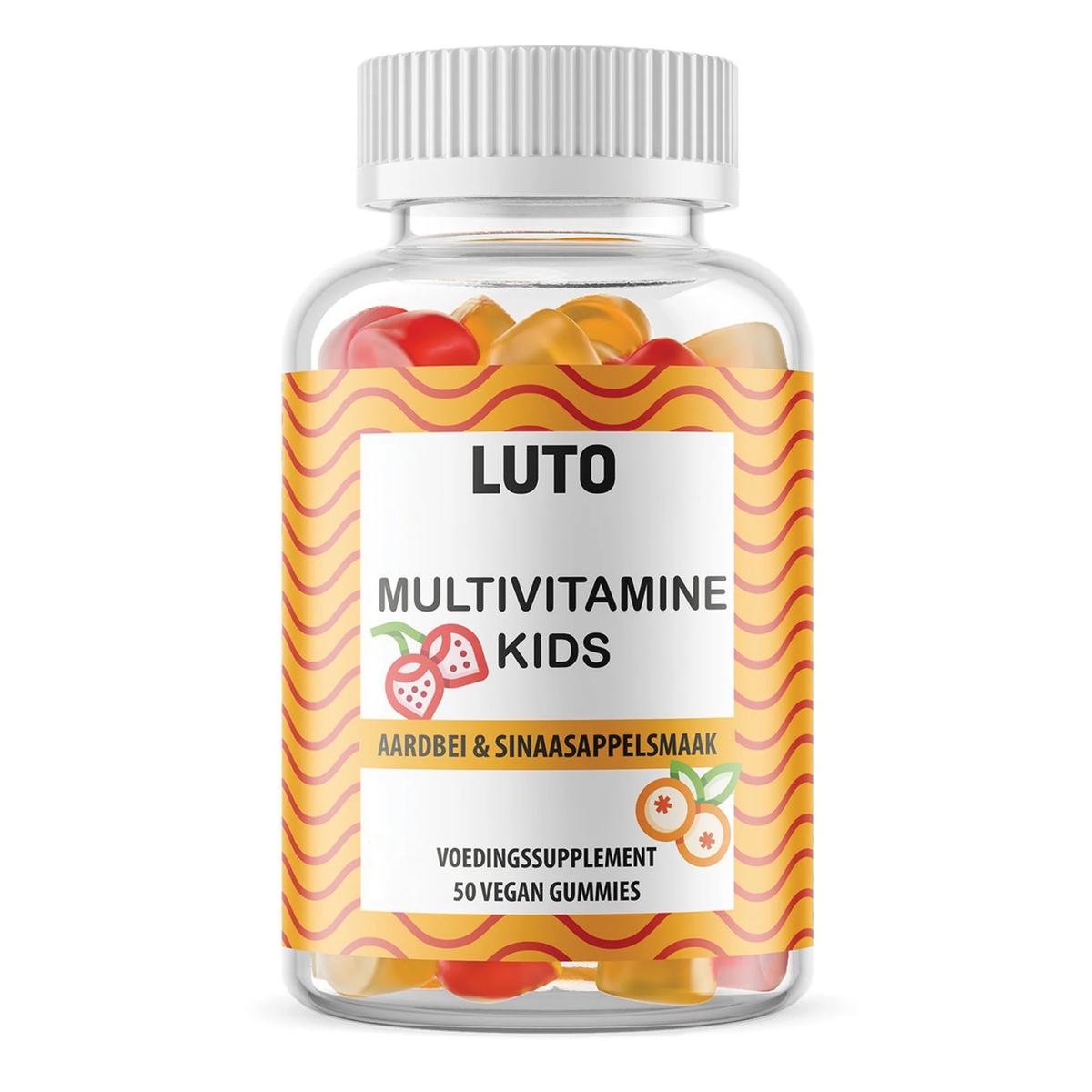
Children who eat few vegetables. Children who want the same three things every night. Does this sound familiar? These vegan gummies from LUTO Supplements are designed as a daily complement to what a diet provides. Each gummy contains, among other things, vitamin A, vitamin C, vitamin D2, B vitamins, iodine, and zinc. Two gummies a day, in strawberry and orange flavors. No pills, no fuss.
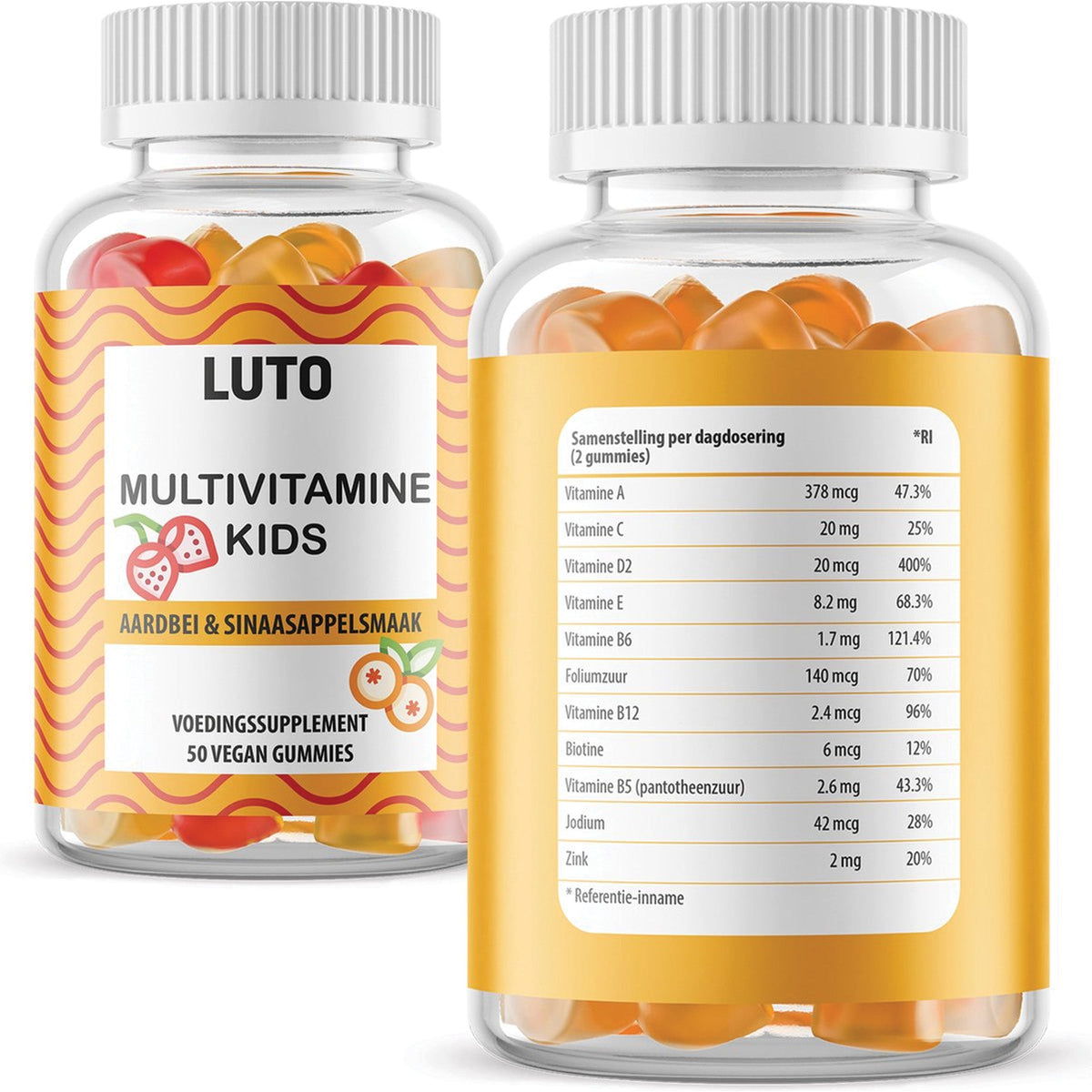
Vitamin A is a fat-soluble vitamin that your body uses in various places. It contributes to the maintenance of normal vision and plays a role in the process of cell specialization. Furthermore, vitamin A contributes to the normal functioning of the immune system and the maintenance of normal mucous membranes. These gummies contain 189 mcg of vitamin A per unit. This is not a megadose, but a thoughtful supplement. Because for fat-soluble vitamins, more is not automatically better. Your body stores them in the liver, so you don't want to accumulate too much.
Many children's gummies use vitamin D3 from wool fat or fish. LUTO chooses vitamin D2, a plant-based form extracted from mushrooms. This makes the gummy entirely vegan. Vitamin D contributes to the normal functioning of the immune system in children and is necessary for normal growth and bone development in children. Each daily dose of two gummies provides 20 mcg. This corresponds to the common daily amount for children. Good to know: vitamin D is fat-soluble. Your child therefore absorbs it better when the gummies are given with a meal.
In addition to vitamins A and D2, each gummy contains nine other vitamins and minerals. Folic acid contributes to the normal functioning of the immune system and plays a role in the process of cell division. Biotin contributes to normal energy metabolism. And iodine contributes to normal growth in children and normal cognitive function. What many people don't know: iodine also plays a role in the production of thyroid hormones. The amount of vitamin C, at 10 mg per gummy, is modest. It's primarily a small addition to what your child already gets from fruits and vegetables.
The gummies are made with citrus pectin rather than gelatin. This makes them suitable for children who eat vegan, or for families who avoid gelatin for other reasons. The colors come from black carrot and beta-carotene. The flavors are natural. They contain neither gluten nor lactose. However, each gummy does contain sugar and tapioca syrup. This is honestly the case for almost all gummies on the market. This is why they taste good and children take them without protesting.
With 50 gummies in the jar, at two per day, you have enough for 25 days. A multivitamin in gummy form never replaces a varied plate. But as a supplement on days when vegetables are scarce, it offers an accessible way to supplement the intake of vitamin A, D2, and a handful of other nutrients.
While many children's gummies use vitamin D3 from lanolin or fish oil, this product contains vitamin D2 extracted from mushrooms, making the gummy entirely plant-based. The daily dose of 20 mcg corresponds to the usual recommended amount for children.
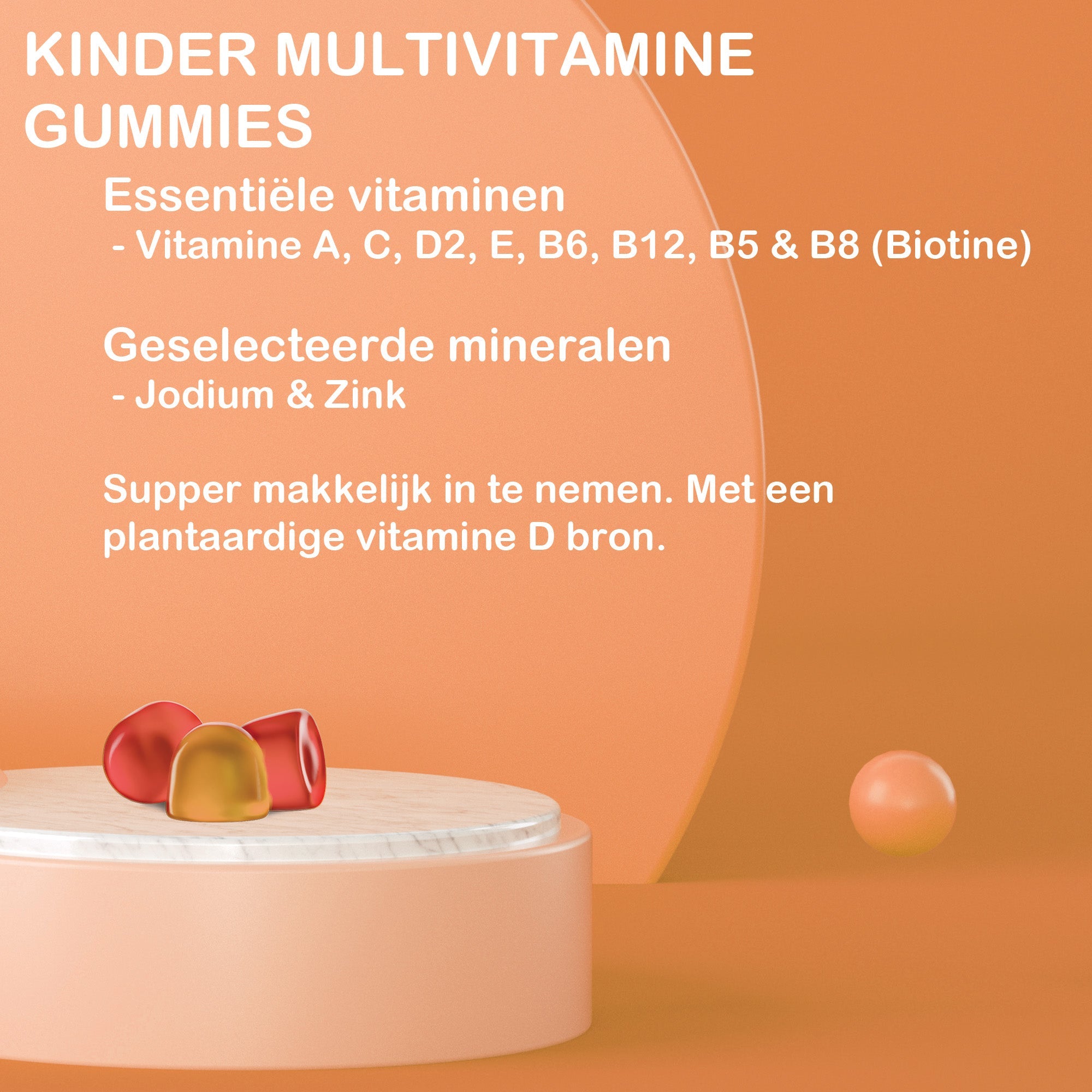
Each daily dose of two gummies provides vitamins A, C, D2, E, B5, B6, B12, folic acid, biotin, iodine, and zinc. This covers a broad spectrum of nutrients as a daily supplement to regular meals.
The gummies are bound with citrus pectin, not gelatin. This makes them suitable for vegan children. They contain no gluten, no lactose, and no artificial colorings. The colors come from black carrot and beta-carotene.
The flavour is based on natural aromas. No pills to swallow, no drops that children refuse. Two gummies a day for breakfast or dinner, without daily battles at the table.
* Prozentsatz der Referenzaufnahme gemäß Verordnung (EU) Nr. 1169/2011.
Reply within one business day
Our customer service is available on weekdays from 9:00 AM to 5:00 PM.

From 4 years old. The gummies are adapted in size and dosage for children in this age group. The product is not intended for younger children, particularly due to the risk of choking on the gummy forms.
Two per day. Give them preferably with a meal, as fat-soluble vitamins A, D2, and E are better absorbed when there is a little fat in the meal. More than two gummies per day is not recommended.
Yes, they contain sugar and tapioca syrup. This is true for almost all gummy supplements on the market. This is why gummies taste good and children take them without difficulty. The amount per gummy is small, but please consider this if you are monitoring your child's total sugar intake.
With 50 gummies and a daily dose of 2 units, you do indeed get 25 days. That's less time than some jars of tablets. The advantage is that you can quickly see if your child likes the gummies before having a large supply at home. With quantity discounts, the price per jar decreases if you order multiple jars at once.
Vitamin D2 (ergocalciferol) comes from mushrooms and is therefore plant-based. Vitamin D3 (cholecalciferol) is generally extracted from wool fat or fish, although vegan versions derived from lichen also exist. Both forms are converted into the same active substance in your body. However, studies show that at the same dose, D3 increases blood vitamin D levels slightly more effectively than D2. LUTO deliberately chooses D2 here to keep the gummy entirely vegan.
The biggest difference lies in children's acceptance. Gummies taste like fruit and are chewed, while tablets must be swallowed. This makes gummies much more accessible for children who have difficulty swallowing. A disadvantage of gummies is that they require sugar or syrup for structure and taste. In terms of active ingredients, higher doses can often be put into a tablet than into a gummy.