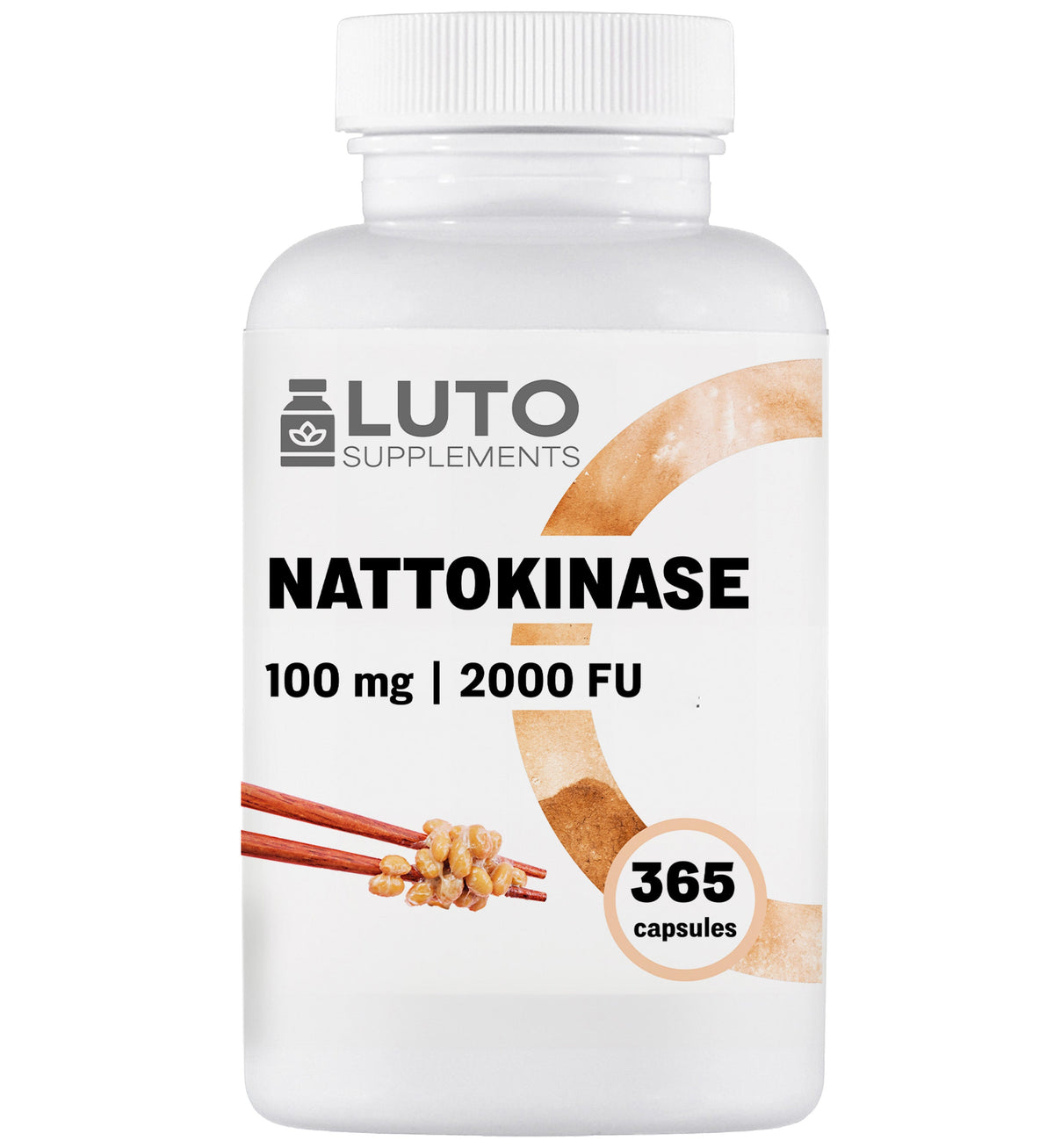
LUTO Nattokinase 100 mg pot de 365 gélules - enzyme issue de soja fermenté
LUTO Nattokinase 100 % vegan et hypoallergénique - sans gluten, sans lactose et sans arômes
LUTO Nattokinase haute teneur avec 2000 FU - enzyme issue de fèves de soja fermentées
LUTO Nattokinase 365 gélules grand format - 100 mg avec 2000 FU d'activité par gélule
Pourquoi choisir la LUTO Nattokinase - haute teneur et un an de réserve avec 365 gélules
LUTO Nattokinase testée pour la pureté et la sécurité - chaque lot testé, complément certifié

LUTO Supplements

Nattokinase 100 mg 20,000 FU/g | 365 Capsules | LUTO Supplements

Angebotspreis€19,90

Nicht auf Lager.

Tarifs dégressifs

Quantité Prix unitaire Remise
1 pièce €19,90 -
2 pièces €18,91 -5%
3 pièces €17,91 -10%
4 pièces €16,92 -15%

Spezifikationen

Kategorie Enzymes
Artikelnummer Auf Anfrage
Barcode 8721055250845
Mindestens haltbar bis Auf Anfrage
Chargennummer Auf Anfrage
Inhalt Auf Anfrage
Anzahl Portionen Auf Anfrage

Nattokinase 100 mg with 2000 FU from natto

Looking for a simple enzyme from fermented soybeans? LUTO Supplements' nattokinase 100 mg provides 2000 FU per capsule, obtained from natto. One jar contains 365 vegetable capsules, enough to last a full year at one per day. Below, we calmly explain exactly what this natto enzyme is, where it comes from, and what to look out for when comparing it.

What nattokinase does in your body

Nattokinase is a serine protease, an enzyme that cuts proteins at specific locations. In the laboratory, it breaks down fibrin, the fibrous protein that gives structure to a blood clot. But what happens when you swallow a capsule? Your body primarily views nattokinase as a protein, which is digested in your stomach and intestines like any other dietary protein. The amount of enzyme that reaches your intestine intact varies from person to person and depends on factors like your stomach acid. We deliberately make no other claims here. For nattokinase, there are no EU-approved health claims; therefore, you will read nothing from us about what else it might do.

What natural nattokinase really is

You often encounter the term "natural nattokinase." Natural here means that the enzyme comes from a food and is not synthetically reproduced in a factory. Nattokinase indeed forms spontaneously when soybeans ferment with the bacterium Bacillus subtilis var. natto, exactly as in the traditional Japanese dish natto. After fermentation, the enzyme is extracted from the beans and purified into a powder. No chemical synthesis is involved. The soybeans used are also declared non-GMO, so genetically modified soy is excluded.

Why FUs tell more than milligrams

For most supplements, the number of milligrams is sufficient. For an enzyme, this is different. The activity of nattokinase is expressed in FUs (fibrinolytic units), a measure of the enzyme's activity. This product is standardized to 20,000 FU per gram, so 100 mg of powder in a capsule corresponds to 2000 FU. Two jars containing the same number of milligrams can therefore differ greatly in activity. So, those comparing nattokinase capsules look at the FU value, the source, and the purity, not just the weight. This FU activity is measured by a laboratory by placing the enzyme on a thin layer of fibrin and observing the size of the clear area that forms. The larger this area, the higher the FU value. And this is precisely the number that many online stores omit.

A brief composition and the question of soy

The ingredient list is as short as possible: nattokinase, rice flour as a filler, and an HPMC capsule (hydroxypropyl methylcellulose, a plant-based material). No colorants, odors, or flavors, and no magnesium stearate. A question that often comes up is about soy. The enzyme is extracted from soy, so soy is listed as an allergen on the label. If you are allergic to soy, do not use this product without first consulting your doctor. For those who eat plant-based, the capsule is perfectly suitable, as no animal materials are involved. And with 365 capsules in one jar, you order once and are set for a year.

In short, this is a simple enzyme from natto: 2000 FU per vegetable capsule, standardized to 20,000 FU/g, in a jar that lasts a year. No frills, just nattokinase with a clear FU value and transparent origin from fermented soy.

Why choose this Nattokinase 100 mg 20,000 FU/g?

Standardized to 20,000 FU/g

The enzyme is derived from fermented soy with Bacillus subtilis var. natto and is standardized to 20,000 FU per gram. Declared GMO-free, with batch controls for purity and transparent label value.

2,000 FU per capsule from natto

Each capsule provides 100 mg of nattokinase, or 2,000 FU of enzymatic activity. This is the same amount as that studied in most research on the substance, and a full-fledged content compared to the 1,000 FU variants sometimes encountered.

365 capsules for a whole year

One bottle contains 365 capsules, enough to cover an entire year at one per day. This means you order just once instead of monthly, whereas most brands sell bottles of 30 to 90 capsules.

Vegetable capsule, non-GMO soy

The HPMC capsule is plant-based and suitable for vegetarians and vegans. Short ingredient list, free from colors, odors, or flavors, and without magnesium stearate.

Zusammensetzung

* Prozentsatz der Referenzaufnahme gemäß Verordnung (EU) Nr. 1169/2011.

Ingredients:
Nattokinase (20,000 FU/g), produced by fermentation with Bacillus subtilis var. natto; bulking agent: rice flour; capsule shell: hydroxypropyl methylcellulose (HPMC). The soy used is declared GMO-free.
Directions for use:
Take 1 capsule daily with a meal and a glass of water. It is best to take the capsule at the same time each day so that it becomes a fixed part of your routine.
Storage advice:
Store in a cool, dry place away from light, at room temperature. Close the packaging tightly and keep out of reach of young children.
Safety:
Intended for adults only. Do not use during pregnancy or breastfeeding. Do not use if taking anticoagulants or antiplatelet drugs, if you have known blood clotting disorders, or around (scheduled) operations; in these situations, always consult your doctor first. Contains soy. If taking medication or if you have existing medical conditions, consult a doctor or pharmacist beforehand. Discontinue use and consult a professional if unexpected or persistent problems occur. A dietary supplement is not a substitute for a varied diet. Keep out of reach of young children.

Health claims

Why is there sometimes little or no information on how a product works?
Unfortunately, due to strict European regulations, we can only provide limited information on product actions today. Only so-called authorized claims listed in the EU database may be mentioned. The results of scientific studies therefore, for the most part, cannot be shared. For example, we cannot say anything about the action of caffeine, even though the effect of coffee is known to everyone. Do you have specific questions about this product or would you like more information on how it works? Please do not hesitate to contact our customer service for personalized advice.

Any questions?

Reply within one business day

Our customer service is available on weekdays from 9:00 AM to 5:00 PM.

  • 💬 Cat
  • 📧 customerservice@luto-supplements.nl
  • 📞 038 - 303 2160
Referente

Frequently Asked Questions

Is natto an anticoagulant?

No. Natto is a traditional food, not a medicine, and this supplement isn't either. However, nattokinase can influence blood clotting. Therefore, we advise against its use in combination with anticoagulants or antiplatelet drugs, in cases of known bleeding disorders, and around scheduled surgery, unless explicitly approved by your doctor. In doubt? Consult your doctor or pharmacist first.

What are the disadvantages of nattokinase?

The main point of concern is blood coagulation: do not use nattokinase with anticoagulants and stop well before surgery, in consultation with your doctor. Furthermore, the product contains soy, so it is not suitable for those with a soy allergy. It is also not intended for children, pregnant or breastfeeding women. Some people experience mild stomach upset with enzyme supplements. And as it is a protein, absorption can vary from person to person.

What does FU mean, and how many are in this product?

FU stands for fibrinolytic units and is a measure of the enzyme's activity, not its weight. This product is standardized to 20,000 FU per gram, so 100 mg of powder per capsule equates to 2000 FU. Therefore, for nattokinase, you compare products by FU and not just by milligrams, as two jars containing the same number of milligrams can still differ in activity.

Is this product suitable for soy allergies and is it non-GMO?

Nattokinase is extracted from soy, so soy is listed as an allergen on the label. If you have a soy allergy, do not use this product without consulting your doctor. However, the soy used is declared non-GMO, so genetically modified soy is excluded. The capsule itself is vegetarian (HPMC) and contains no animal-derived ingredients, making the product suitable for a vegan diet.

How is nattokinase absorbed by the body?

Nattokinase is a protein enzyme and can therefore be sensitive to stomach acidity and digestive enzymes. There are products with an enteric coating to protect the enzymes until they reach the intestines; these capsules are not specified as such. Taking them with a meal and a glass of water is a convenient way to use them. Actual absorption can vary from person to person and depends on factors such as stomach acid production and digestion.

What is the difference between Nattokinase and Serrapeptase?

Nattokinase and Serrapeptase are both proteolytic enzymes, but they differ in their origin and unit of measurement. Nattokinase comes from fermentation with Bacillus subtilis var. natto and its activity is expressed in FU (Fibrinolytic Units). Serrapeptase is originally a bacterial enzyme associated with the silkworm and is usually measured in SU or SPU. Due to these differences, they are not interchangeable one-for-one; the choice depends on your objective and personal preference.