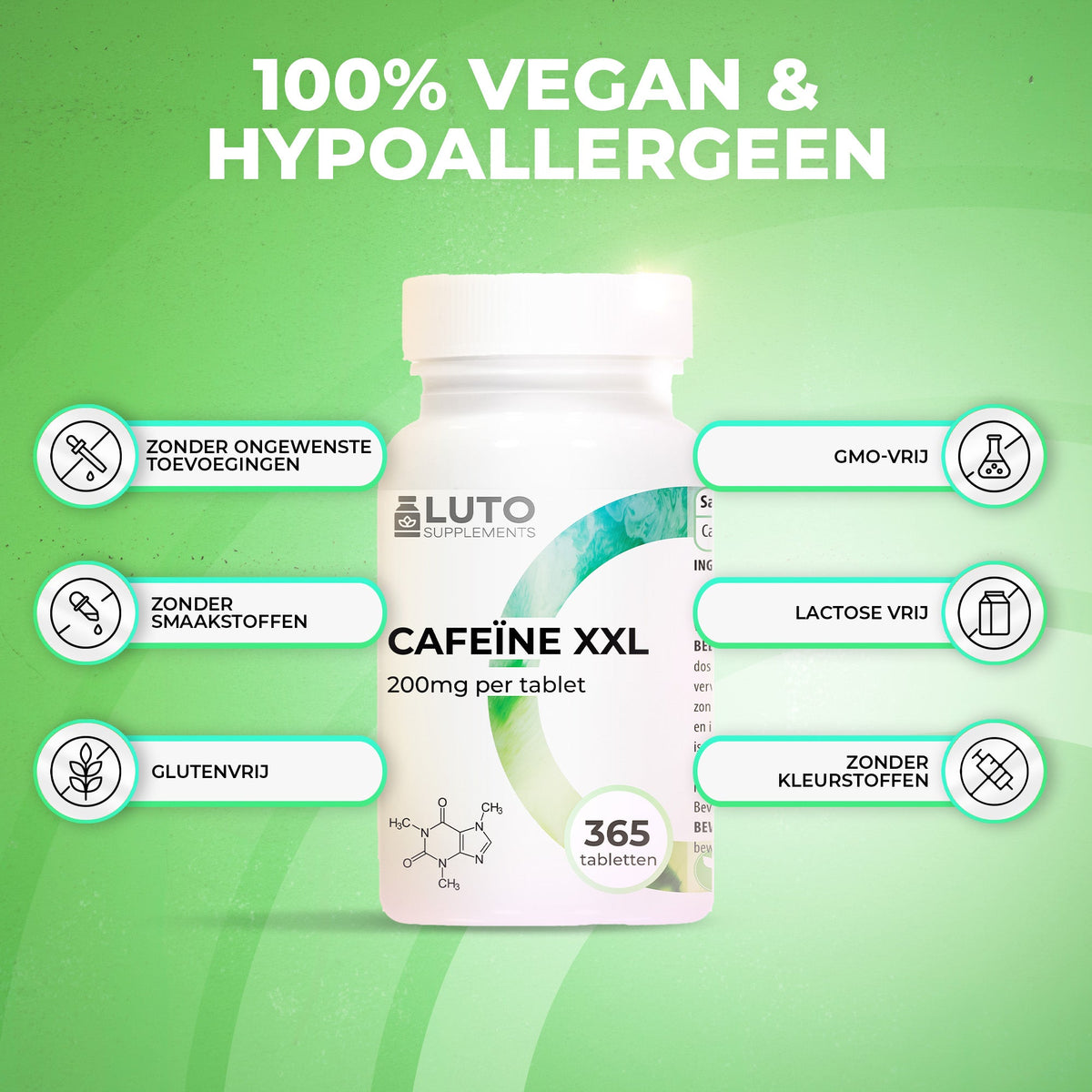
Anhydrous Caffeine 200mg in 365 Tablet Jar
Discover the precision of anhydrous caffeine in convenient tablets. This caffeine supplement contains only caffeine and microcrystalline cellulose, so you know exactly what you're taking. For anyone who prefers a standardized intake rather than coffee or energy drinks.
Ingredients and How They Work: Adenosine Receptor Antagonism and cAMP
Anhydrous caffeine (1,3,7-trimethylxanthine) is a methylxanthine alkaloid. In the central nervous system, it binds as a competitive antagonist to adenosine A1 and A2A receptors, temporarily blocking adenosine's inhibitory signaling. This modulates dopaminergic and noradrenergic neurotransmission and inhibits phosphodiesterase, leading to an increase in intracellular cAMP. The biochemical properties of anhydrous caffeine are identical to those of caffeine from natural sources; the distinction lies primarily in the anhydrous and standardized form.
Benefits of Anhydrous Caffeine: Biochemistry and Bioavailability
After oral intake, anhydrous caffeine is absorbed rapidly and almost completely; peak plasma concentrations typically occur within 30 to 60 minutes. Bioavailability is comparable to that of coffee or tea, but tablets provide a consistent amount with each dose. The biological half-life averages 3 to 7 hours, determined in particular by CYP1A2 activity and individual factors.
Comparison with Other Supplements and Caffeine Sources
Compared to coffee or energy drinks, anhydrous caffeine does not contain associated plant substances such as chlorogenic acids or polyphenols. Tea often provides L-theanine in addition to caffeine; this combination is not present in this product. Compared to powders or capsules, tablets offer the same active substance, but differ mainly in excipients and dosage consistency.
In summary: anhydrous caffeine is the same 1,3,7-trimethylxanthine as in coffee and tea, but in an anhydrous and standardized form. Thanks to the solid tablet form, the amount per dose can be precisely determined.